Mastering Financial Freedom with a Debt Tracker KDP Interior: A Comprehensive Guide to Sizes, Formats, and Usage
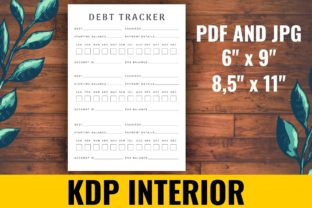
In an era where financial wellness is increasingly prioritized, the tools we use to manage our money have evolved significantly. While digital apps and spreadsheets dominate the market, there is a profound resurgence in analog tracking methods. For self-publishers, journal creators, and individuals seeking tangible financial organization, the Debt Tracker KDP Interior has emerged as an essential resource. This specialized layout is designed not just for recording numbers, but for fostering a psychological shift toward debt freedom. Understanding the nuances of this interior—including its availability in PDF and JPG formats and its adaptation to 6x9 inch and 8.5x11 inch sizes—is crucial for anyone looking to create or utilize these powerful financial tools effectively.
The Purpose and Significance of Analog Debt Tracking
To fully appreciate the value of a dedicated debt tracker interior, one must first understand why physical tracking remains relevant in a digital age. Behavioral finance research suggests that the act of writing down expenses and debts by hand creates a stronger cognitive connection to spending habits than typing data into an app. A Debt Tracker KDP Interior capitalizes on this phenomenon by providing structured prompts that force users to pause, reflect, and intentionally record their financial status.
The significance of this tool extends beyond simple arithmetic. It serves as a visual roadmap out of financial distress. When a user fills out a page dedicated to a specific credit card or loan, they are engaging in active accountability. The interior pages typically include sections for starting balances, interest rates, minimum payments, and extra payment allocations. This comprehensive view transforms abstract debt into manageable milestones. For creators selling on Amazon KDP, offering this specific niche interior addresses a high-intent audience actively seeking solutions to improve their credit scores and reduce financial anxiety.
Bridging Financial Literacy and Daily Habits
Financial literacy is often taught theoretically, but debt repayment is a practical, daily discipline. A well-designed tracker bridges this gap. It fits seamlessly into modern life by serving as a hybrid between a planner and a ledger. In educational contexts, these trackers are increasingly used by students managing tuition loans or young professionals navigating entry-level salaries. By integrating debt tracking into a daily or weekly routine, users build muscle memory regarding budget constraints. The physical book becomes a safe space to confront financial realities without the distractions of notifications or internet connectivity, promoting a focused environment for financial planning.
Understanding Format Versatility: PDF vs. JPG
When acquiring or creating a Debt Tracker KDP Interior, understanding file formats is technical knowledge that directly impacts product quality and usability. These interiors are commonly available in two distinct formats: PDF and JPG. Each serves a unique purpose in the publishing and design workflow.
- PDF Format: This is the industry standard for print-ready files. A PDF preserves vector lines, text sharpness, and exact dimensions. For a debt tracker, where crisp lines and legible typography are non-negotiable, PDF is the superior choice for uploading to KDP. It ensures that when the book is printed, every box and line appears exactly as intended without pixelation.
- JPG Format: Raster image files like JPG offer flexibility for designers who wish to customize the interior before publication. If you plan to add custom branding, change color schemes, or merge the debt tracker with other journal elements in software like Photoshop or Canva, JPG files provide an editable base layer. However, users must ensure high resolution (300 DPI) to maintain print quality.
Having access to both formats empowers creators to adapt the product. You might use the PDF for immediate publishing while utilizing the JPG version to create marketing mockups or social media content showcasing the interior pages. This dual-format availability maximizes the utility of the asset, catering to both ready-to-publish entrepreneurs and hands-on designers.
Selecting the Right Size: 6x9 Inch vs. 8.5x11 Inch
Size matters immensely in the user experience of a financial tracker. The Debt Tracker KDP Interior is strategically available in two primary trim sizes, each catering to different user behaviors and needs. Choosing between them requires understanding the end-user's lifestyle.
The Portable Power of 6x9 Inch
The 6x9 inch format is the quintessential portable journal size. It is designed for users who want to track their finances on the go. This size fits easily into handbags, backpacks, and glove compartments. For a debt tracker, this portability encourages frequent updates. Users can bring the book to coffee shops, waiting rooms, or work breaks, making financial review a habit rather than a chore. Despite its smaller footprint, a well-designed 6x9 interior maximizes whitespace to prevent the pages from feeling cluttered. This size is ideal for personal debt journeys, student loan tracking, and minimalist budgeters who prefer discretion.
The Comprehensive Utility of 8.5x11 Inch
Conversely, the 8.5x11 inch format offers expansive real estate for detailed tracking. This size mimics standard office paper, making it familiar and comfortable for extensive data entry. It is particularly suitable for households managing multiple streams of debt, small business owners tracking liabilities, or individuals who struggle with handwriting in smaller spaces. The larger canvas allows for additional columns, such as "Reason for Expense," "Emotional State," or long-term goal visualization charts. For seniors or those with visual impairments, the 8.5x11 version provides better accessibility through larger fonts and wider spacing. In a business or educational setting, this size also functions well as a workbook or workshop companion.
Maximizing the 100-Page Structure
A standard Debt Tracker KDP Interior typically comprises 100 pages. This page count is not arbitrary; it represents a balance between durability, cost-effectiveness, and sufficient tracking duration. One hundred pages generally allow for tracking multiple debts over several months or a single complex debt over a year, depending on the layout density.
To make the most of this structure, users and creators should understand the anatomy of the pages. A robust interior includes:
- Index Pages: Essential for navigating between different creditors or accounts within the book.
- Debt Summary Sheets: High-level overviews that update monthly to show total progress.
- Individual Payment Logs: Detailed tables for recording dates, amounts paid, and remaining balances.
- Milestone Trackers: Visual coloring pages or checklists that reward users for paying off specific percentages of debt.
- Reflection Sections: Lined or dotted areas for journaling about financial triggers and successes.
This structure transforms a blank notebook into a guided financial intervention. For KDP sellers, ensuring these 100 pages are logically ordered and professionally formatted is what separates a bestseller from a generic notebook.
Common Misunderstandings About Debt Tracker Interiors
Despite their growing popularity, several misconceptions persist regarding these interiors. Clarifying these helps users set realistic expectations and creators avoid common pitfalls.
Misconception 1: It replaces a budget.
A debt tracker is a specialized tool, not a comprehensive budgeting system. While it tracks liabilities and repayments, it does not typically account for income allocation or variable living expenses. Users should be educated to use this tracker alongside a separate budget or expense log for complete financial health.
Misconception 2: Digital files mean instant perfection.
Simply downloading a PDF or JPG does not guarantee a perfect print. Creators must verify margins, bleed settings, and gutter safety zones specific to KDP’s printing requirements. A 6x9 interior cannot simply be resized to 8.5x11 without reformatting, as the proportions and usable space differ significantly.
Misconception 3: More pages equal better value.
While 100 pages is a standard sweet spot, some assume thicker is always better. However, a debt tracker that is too thick can become intimidating and cumbersome. The 100-page limit encourages completion and prevents the user from feeling overwhelmed by empty space. Quality of layout trumps quantity of pages.
Practical Relevance in Modern Financial Wellness
The Debt Tracker KDP Interior is more than a stationery product; it is a component of the broader financial wellness movement. As inflation and cost-of-living pressures mount, consumers are seeking agency over their economic circumstances. This tracker provides a low-cost, high-impact method for regaining control. For entrepreneurs in the KDP space, it represents a product with evergreen demand. Unlike trend-based journals, debt management is a perpetual need.
Furthermore, these interiors support various debt repayment strategies, including the Debt Snowball and Debt Avalanche methods. By providing neutral, flexible layouts, the tracker accommodates different financial philosophies without dictating a single approach. This inclusivity makes it relevant to a diverse audience, from recent graduates to retirees downsizing their lifestyles.
Building a Broader Understanding
Ultimately, mastering the use or creation of a Debt Tracker KDP Interior requires a holistic perspective. It involves appreciating the tactile benefits of analog tracking, understanding the technical specifications of PDF and JPG files, and selecting the appropriate 6x9 or 8.5x11 size for the target demographic. Whether you are a designer looking to expand your catalog or an individual embarking on a journey to financial freedom, this tool offers structure, clarity, and motivation.
By leveraging the 100-page format effectively and respecting the distinct advantages of each size and file type, users can transform debt repayment from a source of stress into a documented journey of achievement. In doing so, the humble debt tracker proves that even in our hyper-digital world, the pen remains a mighty instrument for change.