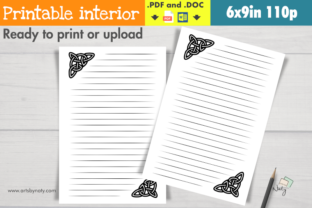
A Celtic Knot Corners Printable Notebook: Integrating Classic Design into Modern Publishing Workflows
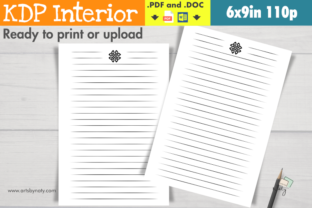
For independent publishers, content creators, and small business owners, the search for high-quality, royalty-free interiors is a constant operational bottleneck. Sourcing designs that are both aesthetically pleasing and commercially viable often involves navigating complex licensing agreements or spending hours creating assets from scratch. A Celtic Knot Corners Printable Notebook addresses this specific friction point by providing a pre-formatted, KDP-ready interior that balances artistic heritage with modern production standards. This resource is not merely a collection of clipart; it is a functional asset designed to streamline the low-content book publishing process while maintaining professional quality.
The integration of this notebook template into your workflow serves multiple strategic purposes. Whether you are expanding an existing catalog of journals, creating branded merchandise for a niche audience, or developing educational materials that require cultural relevance, having a reliable base file reduces time-to-market. The 6x9 inch format and 110-page count represent industry standards for trade paperbacks, ensuring compatibility with Amazon KDP’s printing specifications without requiring manual resizing or margin adjustments. By utilizing a pre-structured DOC and PDF pack, creators can shift their focus from technical formatting to marketing strategy and audience engagement.
Technical Specifications and File Compatibility
Understanding the technical parameters of A Celtic Knot Corners Printable Notebook is essential for seamless integration into your publishing pipeline. The product includes two distinct file formats, each serving a specific function in the production cycle. The PDF file is the primary deliverable for direct upload to print-on-demand platforms. It preserves vector sharpness, ensures consistent margins, and locks the layout to prevent shifting during the printing process. For creators who need to verify bleed settings or make minor non-textual adjustments, this file acts as the master copy.
The accompanying DOC file provides the necessary flexibility for customization. While the core celtic knot illustrations remain static, the text-based elements are fully editable. This duality allows users to maintain design consistency while adapting the metadata to fit specific branding requirements. The absence of watermarks is a critical feature for commercial application; it eliminates the need for post-production cleanup and ensures that the final printed product looks professionally manufactured rather than prototyped. When importing these files into software like Microsoft Word, Affinity Publisher, or Adobe InDesign, users should verify that page setup dimensions match the 6x9 trim size to avoid unintended scaling.
Customization Protocols for Brand Consistency
The ability to edit the "This notebook belongs to" page and the "Copyright" page transforms a generic template into a proprietary product. This customization capability is vital for establishing intellectual property ownership and brand recognition. For entrepreneurs building a series of themed journals, editing the copyright page allows for the inclusion of specific ISBNs, publisher imprints, and website URLs. This turns the interior of the book into a marketing touchpoint, driving traffic back to your ecosystem without disrupting the user experience.
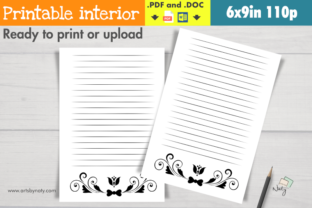
When customizing the ownership page, consider the end-user's interaction with the physical object. For educational or workshop settings, this page can be adapted to include fields for course names, student IDs, or project titles. Professionals using these notebooks for client gifting might replace the standard ownership line with a personalized dedication or company logo. The key is to treat the editable zones as strategic real estate. Because the celtic knot corners provide a strong visual frame, any text added to these pages should utilize clean, legible typography that complements rather than competes with the intricate border art. Maintaining adequate whitespace around the editable areas ensures the design remains balanced after modification.
Strategic Applications Across Different Niches
Celtic imagery carries specific semantic weight that resonates with distinct market segments. Integrating A Celtic Knot Corners Printable Notebook into your product lineup requires aligning the aesthetic with appropriate use cases. The interlaced patterns symbolize continuity, interconnectedness, and heritage, making this design particularly effective for genealogy logs, family history journals, and spiritual reflection notebooks. Unlike minimalist or abstract designs, celtic knots evoke a sense of tradition and permanence, which appeals to users seeking depth and meaning in their analog tools.
For educators and historians, this template offers a culturally relevant vessel for lesson planning, research notes, or student workbooks focused on European history, literature, or art. The visual context reinforces the subject matter, creating a more immersive learning experience. In the wellness and mindfulness sector, the repetitive, flowing nature of the knotwork supports meditation and grounding practices. Publishers targeting this demographic can position the notebook as a companion to guided journals or gratitude practices, where the visual complexity serves as a focal point for contemplation rather than mere decoration.
- Genealogy and Heritage: Use as a structured log for family trees, oral histories, and ancestral research.
- Spiritual and Pagan Practices: Serve as a Book of Shadows, ritual journal, or meditation tracker.
- Literary and Academic: Function as a reading journal for classics, poetry analysis, or historical research notes.
- Creative Writing: Provide a thematic space for fantasy authors, poets, and storytellers to draft ideas.
- Professional Gifting: Offer as a premium branded item for law firms, heritage organizations, or cultural societies.
Workflow Integration and Quality Control
Incorporating this printable notebook into a broader publishing workflow requires attention to quality assurance and platform compliance. Before uploading to KDP or sending to a local printer, always order or generate a digital proof. Check the alignment of the corner illustrations relative to the trim line; while the template is designed to spec, individual printer calibration can vary. Verify that the editable text fields do not encroach upon the safe zone, especially if you have altered font sizes or added logos. Consistency across a series is paramount; if you plan to release multiple volumes with different celtic variations, establish a naming convention and file storage system early to manage versions effectively.
Eficiency in low-content publishing comes from batching similar tasks. Since the DOC file allows for rapid text updates, create a master template with your standard copyright info, disclaimer language, and back-matter marketing links. Save this as a separate base file. When creating new variations, duplicate this master rather than starting from the original source file each time. This prevents accidental loss of your standardized branding elements and reduces the risk of formatting errors. Additionally, keep a record of which keywords and categories perform best for this specific aesthetic. The celtic niche has seasonal peaks, particularly around Samhain, St. Patrick’s Day, and the winter solstice. Aligning your upload schedule with these periods maximizes visibility.
Enhancing Value Through Complementary Assets
A standalone notebook interior is a foundation, but its market value increases when paired with complementary resources. Consider how A Celtic Knot Corners Printable Notebook interacts with other assets in your portfolio. If you sell digital planners or printable wall art, ensure the celtic knot style matches across products to create a cohesive brand identity. Cross-promotion becomes natural when customers recognize the visual language. For physical product sellers, this interior can be bundled with matching bookmarks, sticky notes, or pen loops featuring similar motifs, increasing average order value through thematic consistency.
From a content marketing perspective, the process of customizing and using this notebook provides ample material for audience engagement. Documenting the adaptation process—from selecting fonts to finalizing the copyright page—demonstrates transparency and builds trust with potential buyers who may be hesitant about print-on-demand quality. Sharing mockups that show the notebook in realistic settings helps bridge the gap between digital file and physical product. For those using the notebook personally or within a team, the act of writing in a beautifully framed space can enhance focus and intentionality. The aesthetic environment influences cognitive state; a cluttered or generic page invites scattered thinking, while a deliberate, ornate boundary signals that the contents within are valuable and worthy of care.
Long-Term Usability and Asset Management
Sustainable publishing relies on assets that retain utility over time. Trends fade, but cultural symbols like celtic knots possess enduring appeal. Unlike novelty interiors tied to fleeting pop culture moments, this design remains relevant year after year. To maximize longevity, store the source files in a cloud backup system with clear metadata tags including dimensions, page count, license type, and customization notes. This ensures that even if you pivot your business model or hire virtual assistants, the asset remains accessible and usable without re-learning its specifications.
Monitor customer feedback specifically regarding the usability of the corner designs. Are the knots too dark, causing ink bleed-through on lower-GSM paper? Is the bottom corner interfering with handwriting space? Real-world usage data should inform future iterations or updates to the product description. If users consistently mention using the notebook for a purpose you hadn't anticipated, such as music notation or sketching, adapt your marketing copy to reflect this organic demand. The flexibility of the DOC file means you can quickly create specialized variants—perhaps one with wider lines for musicians or blank space for artists—without redesigning the core aesthetic. This responsiveness to user behavior is what separates successful publishers from those who simply upload and forget.
Ultimately, A Celtic Knot Corners Printable Notebook represents a convergence of artistic tradition and pragmatic efficiency. It removes the technical barriers to entry for creators who want to offer beautiful, meaningful stationery without becoming graphic designers. By understanding its technical constraints, leveraging its customization options, and aligning it with appropriate market niches, publishers can integrate this asset into a sustainable, profitable workflow. The result is a product that honors the past while serving the practical needs of modern organization and expression.