Evaluating the Funny Monsters Journal KDP Interior for Low-Content Publishing
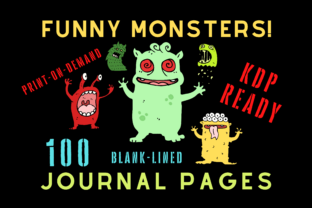
Selecting the right interior template is a critical step in the Amazon KDP publishing process, particularly for creators focusing on the novelty and children’s journal niche. The Funny Monsters Journal KDP Interior represents a specific category of pre-formatted assets designed to streamline production while offering visual engagement. This resource typically consists of a 100-page manuscript formatted at a 6x9 trim size with no bleed specifications. Its defining characteristic is a structured repetition pattern: ten unique monster illustrations alternated ten times to create a cohesive, themed writing experience. Understanding the functional attributes, market positioning, and strategic limitations of this specific interior type is essential for publishers aiming to build a sustainable bookshelf rather than simply uploading generic content.
Defining the Asset Specifications and Structure
The technical parameters of the Funny Monsters Journal KDP Interior are designed to align with standard low-content book manufacturing requirements. The 6x9 inch trim size is widely regarded as the industry standard for journals intended for school-aged children and young adults. It offers sufficient writing space without being cumbersome for smaller hands or backpacks. The "no bleed" designation is a significant practical consideration. In KDP printing, no bleed means all content must remain within a safe margin, ensuring that no artwork is trimmed off during the binding process. This specification reduces formatting errors and rejection rates during the upload phase, making it a safer choice for publishers who may not have advanced graphic design software to manage full-bleed margins.
The internal structure relies on a cyclical layout. Rather than featuring 100 distinct images, which can increase file size and production complexity, this interior utilizes ten unique funny monster designs repeated in sequence. This creates a predictable rhythm for the end-user. For the publisher, this structure balances variety with consistency. It provides enough visual novelty to maintain interest over the course of the journal while maintaining a unified aesthetic theme. The PDF-ready format implies that the file has been flattened and optimized for print, removing the need for further manipulation before submission to the KDP platform.
Strategic Advantages for Niche Publishers
Publishers evaluating this interior should consider its role in portfolio efficiency. Creating high-quality, humorous character art from scratch requires either significant illustration skills or licensing budgets. By utilizing a pre-made Funny Monsters Journal KDP Interior, creators can bypass the asset creation phase and focus on metadata optimization, keyword research, and cover design. This reduction in production time allows for faster iteration and testing within the novelty journal sub-niche.
Furthermore, the specific theme of "funny monsters" targets a distinct emotional response compared to generic lined notebooks or serious academic journals. Humor increases perceived value in the children's stationery market. Parents and gift-givers often seek items that encourage writing through entertainment rather than obligation. A journal featuring whimsical, non-threatening creatures serves as an icebreaker for reluctant writers. From an SEO and discoverability perspective, this specificity helps differentiate the product from the saturated market of plain composition notebooks. The interior content supports long-tail keywords related to creative writing prompts, doodle journals, and humor-based learning tools.
Benefits of the Repetitive Layout Model
- Cognitive Familiarity: Young users benefit from pattern recognition. Seeing a familiar character return every ten pages creates a sense of progression and accomplishment without overwhelming the user with constant new stimuli.
- File Optimization: Reusing ten assets keeps the PDF file size manageable, ensuring faster upload times and reducing the risk of processing errors on the KDP dashboard.
- Branding Consistency: The limited set of characters makes it easier to create matching merchandise, bookmarks, or series branding, as there are only ten core visual elements to adapt across other products.
- Production Reliability: With fewer unique assets, the likelihood of formatting inconsistencies or resolution issues across 100 pages is significantly minimized.
Tradeoffs and Critical Considerations
While the Funny Monsters Journal KDP Interior offers efficiency, objective evaluation requires acknowledging its limitations. The primary tradeoff is exclusivity. Pre-made interiors are often available to multiple publishers unless purchased with exclusive commercial rights. This can lead to market saturation where several books share identical internal content. To mitigate this, the cover design and external marketing copy must do the heavy lifting of differentiation. If the interior is non-exclusive, the success of the book depends almost entirely on how uniquely the exterior presents the shared content.
Another consideration is the depth of engagement. Ten unique images, even when alternated effectively, offer finite replay value. For older demographics or serious journaling enthusiasts, this level of repetition may feel insufficient. This interior is strictly targeted toward casual users, early writers, or those seeking a novelty gift. Publishers must accurately assess whether their target audience values volume of unique content or thematic consistency. Misaligning the interior complexity with audience expectations can result in negative reviews citing repetitive content.
Additionally, the no bleed constraint limits design flexibility. While safer for production, it prevents immersive edge-to-edge artwork. Publishers accustomed to full-bleed aesthetics may find the mandatory white margins restrictive. It is vital to review the previewer carefully to ensure the safe zone margins do not make the layout appear unbalanced or overly sparse relative to the page size.
Situational Fit and Alternative Evaluation
Determining whether this specific interior aligns with business goals requires analyzing current portfolio gaps. The Funny Monsters Journal KDP Interior is a strong fit for publishers building out a seasonal catalog (e.g., Halloween, back-to-school) who need reliable, thematically appropriate filler content. It is also suitable for creators testing the viability of the humor-journal niche before investing in custom illustration. If the goal is rapid deployment and risk mitigation, this asset class performs well.
Conversely, alternatives should be considered if the objective is to establish a premium brand identity or a proprietary intellectual property. If a publisher intends to build a recognizable series where characters drive merchandise sales, relying on stock or shared interiors creates a fragile foundation. In such cases, hiring a freelance illustrator or generating custom AI-assisted art (with proper disclosure and quality control) would be a more appropriate long-term strategy. Similarly, if targeting adult mindfulness or professional planning markets, the whimsical nature of funny monsters will likely cause friction; these audiences typically require sophisticated, minimalist, or highly functional layouts.
Decision-Making Checklist for Publishers
- Rights Verification: Confirm whether the license allows for unlimited commercial use on KDP and whether exclusivity is granted. Non-exclusive rights necessitate superior cover design.
- Audience Alignment: Validate that the "funny monster" aesthetic matches the age group and intent defined in your keyword research. Ensure it does not skew too young or too mature for your selected niche.
- Technical Compliance: Verify the PDF meets current KDP specifications for 6x9 no bleed, including correct gutter margins and resolution (minimum 300 DPI for line art).
- Competitive Analysis: Search Amazon for existing books using similar interiors. Assess if the market is oversaturated or if there is room for a better-presented version of this concept.
- Series Potential: Evaluate if the ten characters have enough personality to support future expansions, such as coloring books or activity pads, maximizing the ROI on this specific interior choice.
Ultimately, the Funny Monsters Journal KDP Interior serves as a functional component within a broader publishing strategy. It solves specific logistical problems regarding formatting and asset creation while introducing constraints regarding uniqueness and design flexibility. Success depends less on the interior itself and more on the publisher's ability to contextualize it within a compelling product listing and a coherent niche strategy. By weighing the efficiency of the 10-alternating-pattern structure against the need for market differentiation, creators can make informed decisions about integrating this resource into their KDP bookshelf.